
Electrical safety in Laval and the South Shore begins with recognizing warning signs, using cords and power bars correctly, keeping panels accessible and protecting outdoor equipment from water, snow and physical damage. Ordinary habits can gradually create risk when electrical products are used outside their intended conditions.
Author bio: This article was prepared by a residential electrical-safety content specialist familiar with Québec contractor licensing, Hydro-Québec safety guidance, municipal fire-prevention practices and seasonal conditions in Laval and the South Shore. It provides general educational information only. Electrical installation, testing and repair work must be performed by an appropriately licensed contractor.
A power bar may remain hidden behind a sofa for years, an extension cord may become a permanent connection for a freezer, and outdoor holiday lights may stay plugged in after snow and rain have soaked the yard. Each situation can create damage, overheating or exposure that remains unnoticed until a problem develops.
Cords, receptacles, panels and outdoor electrical equipment are designed for specific loads, environments and installation methods—not simply for whatever can physically connect to an outlet.
The region includes detached houses, condominiums, post-war bungalows, townhouses and properties with pools, spas, garages and seasonal equipment. Winter storms can cause outages, spring thaw can affect basements, and summer activities bring electrical equipment close to water and outdoor work.
Homeowners can reduce risk by inspecting visible equipment, keeping panels accessible, using approved devices as intended and responding quickly to warning signs. They should not remove panel covers, replace breakers, open receptacles or improvise generator connections.
Electrical Safety Warning Signs That Require Prompt Action
Electrical problems do not always begin with smoke or a complete loss of power. Some conditions start as subtle or intermittent symptoms.
Stop using the affected device or circuit and arrange a professional assessment when you notice:
- a burning or hot-plastic odour;
- sparking, crackling or buzzing from a receptacle, switch or panel;
- unusual warmth around plugs, cords or wall plates;
- discolouration, melting or scorch marks;
- repeated breaker trips or blown fuses;
- a shock, tingling sensation or metal appliance that appears energized;
- water near a panel, receptacle, cord or connected appliance;
- lights that flicker repeatedly without an obvious utility interruption.
Repeated interruptions should not be addressed by continuously resetting the breaker. Review our guide on circuit-breaker tripping in Montreal homes to understand why an overload, fault or damaged device may require investigation.
In an active fire, heavy smoke or immediate danger to occupants, leave the area and contact emergency services. Do not throw water on electrical equipment that may be energized. Do not touch a person who remains in contact with an electrical source.
Use Extension Cords and Power Bars Only as Intended
Extension cords are temporary equipment
Extension cords are useful for temporary tasks, but they are not substitutes for permanent branch circuits or properly located receptacles.
A cord running under a rug, through a doorway or behind furniture can be crushed, overheated or damaged without the condition remaining visible.
Do not:
- run cords under rugs or floor coverings;
- pinch cords in doors or windows;
- staple or nail cords to walls;
- tie cords in knots;
- connect several extension cords end to end;
- use a damaged cord because it still supplies power.
Choose a cord rated for the environment and the connected equipment. Outdoor cords are designed for weather and temperature exposure; ordinary indoor cords are not.
The cord must also be appropriate for the electrical load. Heaters, air conditioners, pumps, freezers and other high-demand equipment should follow the manufacturer’s connection instructions instead of relying on a convenient extension cord.
Power bars do not create additional circuit capacity
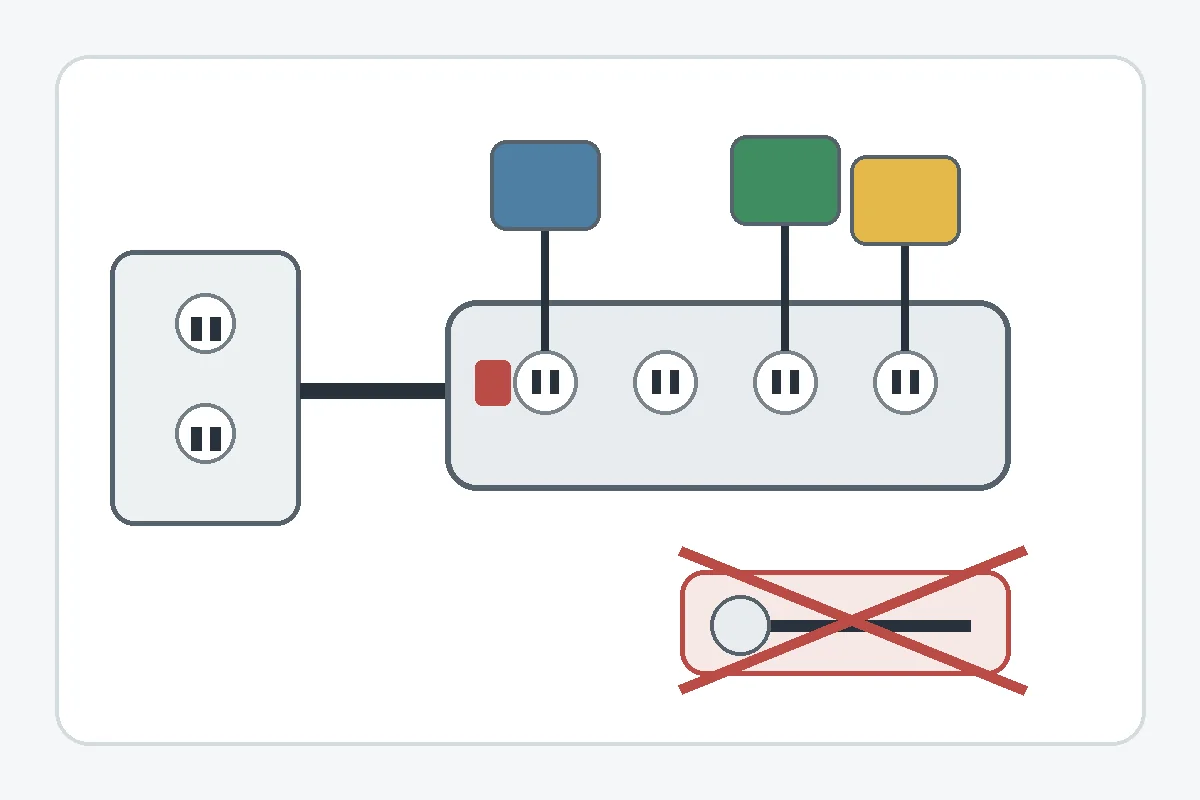
A power bar adds connection points, but it does not increase the capacity of the branch circuit supplying the wall receptacle.
Use a listed power bar with built-in overcurrent protection and keep it visible enough to inspect. Do not connect one power bar to another or use several cube adapters to create a chain of connections.
Replace a power bar that is:
- cracked or physically damaged;
- discoloured;
- loose at the plug or receptacles;
- unusually warm;
- associated with buzzing or a burning smell.
Surge protection can help protect electronic equipment from some voltage events, but it does not make an overloaded circuit safe.
Protect Kitchens, Bathrooms, Basements and Damp Areas
Water lowers the body’s electrical resistance and can increase the consequences of an electrical fault. Kitchens, bathrooms, laundry rooms, garages, unfinished basements and exterior areas therefore require special attention.
Safe habits include:
- keeping appliances and cords away from sinks, tubs and wet counters;
- unplugging portable appliances before cleaning or filling them with water;
- testing user-operable ground-fault protection with the manufacturer-provided TEST button;
- replacing cracked covers and loose devices through the appropriate contractor;
- having corroded exterior or basement equipment assessed;
- keeping basement storage away from panels and electrical equipment;
- correcting leaks and condensation instead of repeatedly drying the surface.
If water reaches a panel, receptacle, appliance or wiring, do not approach through standing water. Flooded electrical equipment should be evaluated before affected circuits are returned to normal service.
Basement moisture can also cause corrosion and damage over time. Review our guide to common electrical problems in older Greater Montreal homes for signs involving rust, water entry, aging wiring and damaged connections.

Inspect Outdoor Outlets, Holiday Lighting and Pool Equipment
Outdoor receptacles and covers
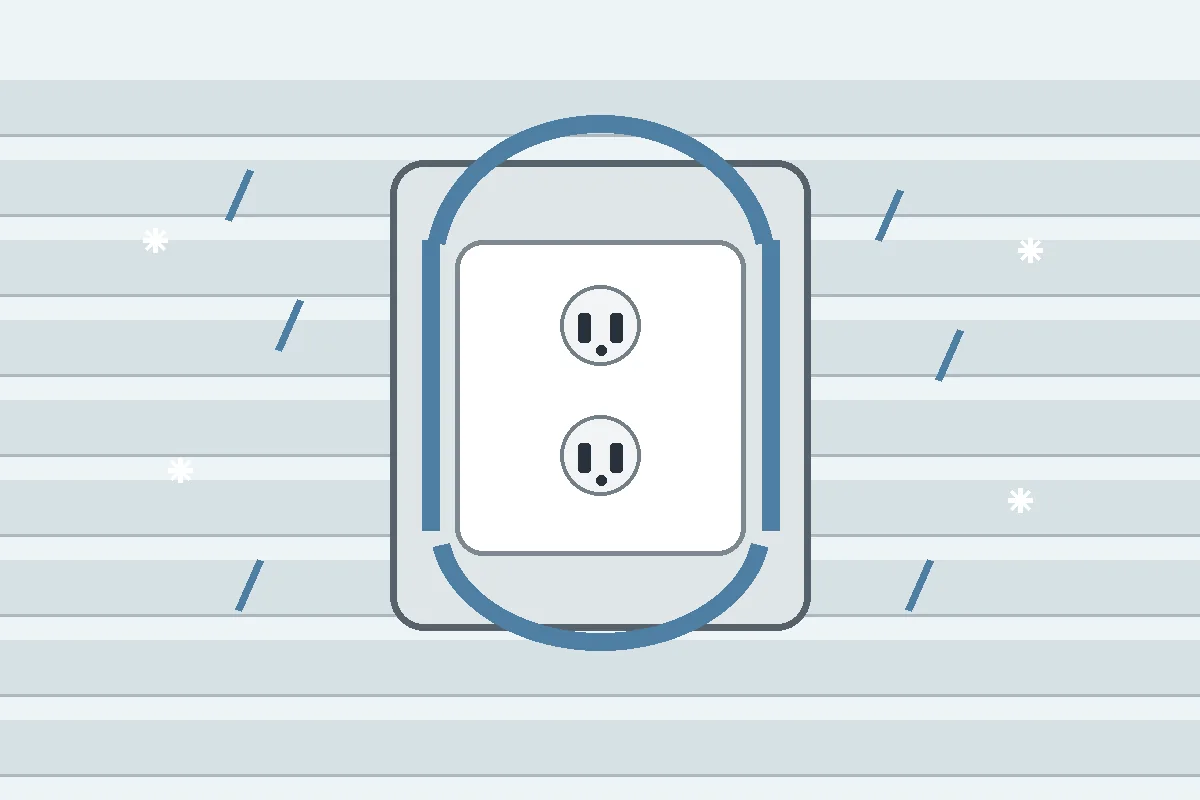
Outdoor devices face rain, snow, ice, sunlight and large temperature changes. Inspect normally visible covers and enclosures for:
- cracks;
- gaps;
- loose mounting;
- rust or corrosion;
- missing seals;
- damage caused by impact or landscaping work.
Keep cords out of puddles, snowbanks, walkways and door openings. Use equipment marked for outdoor use and follow the manufacturer’s instructions.
A cover that protects the receptacle only when nothing is plugged in may not be suitable for a connection that remains energized during rain or snow. The selected cover and enclosure must suit the actual use.
Holiday and landscape lighting
Use lighting listed for the intended location. Inspect cords before every season, avoid damaged sockets and follow the manufacturer’s limit for the number of connected strings.
Outdoor extension cords should remain temporary. Keep lights, cords and connection points away from standing water, compressed snow and combustible landscaping materials.
Pools and spas
Pools, spas and electrical equipment require strict separation, appropriate protection and permanent installation methods.
Do not:
- use an ordinary extension cord for a pool pump, filter or permanent lighting;
- leave electrical connections on wet ground;
- place portable electrical equipment close to the water;
- use damaged cords or corroded enclosures;
- modify a pool or spa circuit without a licensed contractor.
At the beginning of each season, inspect normally accessible cords, covers and enclosures for corrosion, cracking or overheating. Test user-operable protective devices using their TEST buttons according to the manufacturer’s instructions.
Permanent repairs, new outdoor receptacles, pool connections and circuit modifications must be completed by an appropriately licensed electrical contractor.
Keep Electrical Panels Accessible, Dry and Clearly Labelled
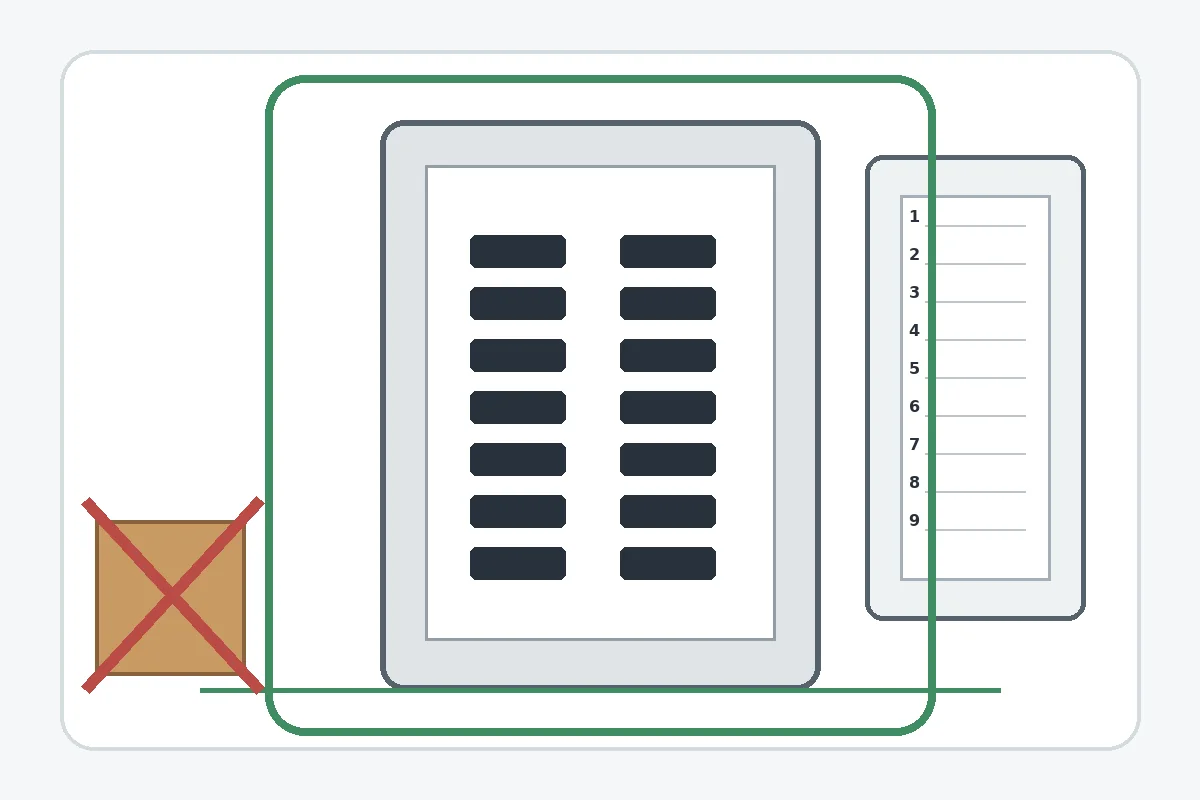
An electrical panel should remain easy to reach during maintenance, troubleshooting or an emergency.
Do not block the panel with:
- boxes;
- shelves;
- freezers or appliances;
- seasonal storage;
- paint, solvents or other combustible products.
Keep the surrounding area dry and report signs of rust, water marks, unusual warmth or odours.
The panel directory should identify the actual rooms and fixed equipment served by each breaker. Labels such as “lights,” “plugs” or “upstairs” are too vague for a house with several rooms.
When circuits are modified, the panel directory should be updated as part of the work.
Homeowners may use the normal panel door to read labels and operate breaker handles when conditions are safe. They should never remove the fixed protective cover. Electrical-service equipment can contain energized components even when the main breaker is switched off.
Plan EV Chargers, Heat Pumps and Renovations Safely
Electrification projects can add substantial electrical demand. An EV charger, heat pump, electric water heater, spa or workshop should not be planned only by locating an empty breaker position.
The contractor may need to assess:
- the existing panel condition;
- approved breaker compatibility;
- the calculated residential load;
- electrical-service capacity;
- feeder and cable routes;
- possible load-management equipment;
- Hydro-Québec coordination.
A subpanel can add distribution positions without automatically increasing the electrical-service capacity. Review our guide comparing an electrical panel and a subpanel before planning major new loads.
Before requesting a quotation:
- identify the exact equipment model and its electrical requirements;
- list other planned loads or renovations;
- provide photographs of the panel exterior and equipment labels without removing covers;
- confirm whether the project affects a condominium declaration, common area or shared service;
- check municipal requirements for the complete project;
- clarify whether Hydro-Québec coordination may be required.
When electrical work forms part of a larger construction project, consult our guide on how to prepare your home for a major renovation.
Generator and Power-Outage Safety
Generators can provide temporary power during winter storms, but incorrect use can cause electrocution, fire, equipment damage or carbon-monoxide poisoning.
Follow these basic precautions:
- operate a fuel-powered generator outdoors at the distance specified by the manufacturer;
- never operate it in a garage, shed, carport, basement or enclosed porch;
- keep it away from doors, windows and ventilation openings;
- keep the generator dry without enclosing it in a way that traps exhaust or heat;
- connect only approved loads;
- do not exceed the generator, cord or power-bar rating;
- never connect a generator directly to a wall receptacle;
- use a properly installed transfer system when supplying household circuits;
- allow the generator to cool before refuelling;
- store fuel according to applicable safety requirements.
Connecting a generator through a household receptacle can energize wiring in an uncontrolled way and endanger occupants, neighbours and utility workers.
During an outage, stay away from standing water when approaching electrical equipment. Keep smoke and carbon-monoxide alarms operating according to their instructions.
Electrical Safety: A 9-Step Monthly Home Check
- Check visible cords. Look for cuts, crushed sections, loose plugs, heat marks and cords trapped under furniture, rugs or doors.
- Inspect power bars. Confirm that each power bar connects directly to a wall receptacle, remains cool and is not overloaded or daisy chained.
- Look at switches and receptacles. Note cracked plates, looseness, discolouration, buzzing or plugs that fall out.
- Test user-operable protection. Use TEST and RESET buttons only according to the device manufacturer’s instructions.
- Review damp areas. Check basements, garages, laundry areas and exterior boxes for leaks, condensation and corrosion.
- Clear the panel area. Remove stored items and confirm that the panel remains dry, visible and accessible.
- Review circuit labels. Record unclear or inaccurate entries for professional correction during the next service visit.
- Inspect outdoor equipment seasonally. Check pool, spa, holiday-lighting and landscape-power equipment before use.
- Confirm emergency readiness. Test smoke and carbon-monoxide alarms according to their instructions and review the household evacuation plan.
Common Electrical Safety Mistakes to Avoid
Using extension cords permanently
A long-term need for an extension cord usually indicates that a correctly located receptacle or dedicated circuit should be evaluated.
Daisy chaining power bars
Additional connection points do not increase the branch circuit’s capacity. They add more plugs, contacts and potential failure points.
Resetting a breaker repeatedly
A repeated trip indicates that the underlying condition remains. Leave the circuit off and arrange an assessment instead of repeatedly forcing it back into service.
Using indoor cords outdoors
Indoor cords are not designed for rain, snow, moisture or large temperature changes. Use equipment marked for the location and task.
Blocking the electrical panel
Stored items delay access during an emergency and may introduce combustible materials or moisture near the equipment.
Improvising generator connections
Connecting a generator through a receptacle can energize the home’s wiring without proper isolation and create a severe hazard.
Assuming a renovation permit replaces electrical licensing
Municipal approval and contractor licensing are separate requirements. Electrical installation work must still be completed by an appropriately licensed contractor.
Hiring without verifying the contractor
Before accepting a quotation, consult our guide on how to choose an electrical contractor, including licence verification, insurance, scope and project documentation.
When to Call Emergency Services, Hydro-Québec or a Contractor
Call emergency services when:
- there is an active fire or heavy smoke;
- a person is receiving an electric shock;
- floodwater has reached energized equipment;
- there is an immediate danger to occupants.
Contact Hydro-Québec when:
- a power line is down;
- utility equipment is damaged;
- the service connection presents an external hazard;
- a tree, vehicle or object is touching a power line.
Stay at least three metres away from power lines and from objects touching them.
Contact a licensed electrical contractor for:
- repeated breaker trips or fuse operation;
- warm or discoloured receptacles and switches;
- buzzing, crackling or burning odours;
- corrosion or water near electrical equipment;
- damaged wiring;
- new circuits or receptacles;
- outdoor or pool electrical equipment;
- EV-charger and heat-pump connections;
- generator transfer systems;
- panel or electrical-service work.
Conclusion
Electrical safety in Laval and the South Shore depends largely on ordinary household habits. Temporary cords should remain temporary, power bars should not be chained, outdoor connections must be suited to snow and rain, and electrical panels should remain dry, labelled and accessible.
Seasonal conditions create additional risks. Pools and spas bring electrical equipment near water, winter storms increase generator use, and spring moisture can affect basements and service equipment.
A monthly visual inspection can help identify developing problems, but it does not replace professional testing or repairs.
When symptoms involve unusual heat, burning odours, shocks, repeated trips, water entry, sparking or damaged equipment, stop using the affected area and contact the appropriate emergency service, utility or licensed contractor.
Sources and References
Official and primary sources reviewed June 26, 2026. Verify codes, municipal guidance, financial programs, utility procedures and product instructions again on the publication date.
- Régie du bâtiment du Québec — Current electrical regulations
- Régie du bâtiment du Québec — Work homeowners may perform
- Corporation des maîtres électriciens du Québec
- Hydro-Québec — Preventing electrical accidents at home
- Hydro-Québec — Pool and spa electrical safety
- Hydro-Québec — Power-outage safety rules
- Hydro-Québec — Outdoor work near power lines
- Ville de Laval — Outdoor fire-prevention guidance
- Ville de Laval — Preventing a fire
- Ville de Laval — Flood emergency guidance
- Ville de Brossard — Power-failure safety
- Ville de Longueuil — Fire-prevention guidance
