
Circuit Breaker Keeps Tripping? Here’s Exactly What to Do in Greater Montreal
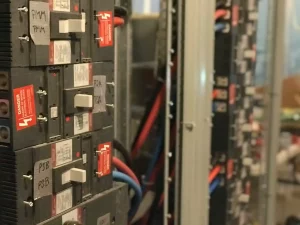
A circuit breaker that keeps tripping is more than an inconvenience — it’s your home’s built-in safety system trying to protect you from overheating wires, electrical fires, or damaged appliances.
In Greater Montreal homes, especially older properties in Laval, Mirabel, and on the South Shore, repeated tripping has become increasingly common. This is often due to aging wiring, outdated panels, and the growing electrical demands from modern renovations, EV chargers, heat pumps, and smart home systems.
At Daricson Service, our RBQ-licensed electricians (RBQ #5834-0761-01) regularly help homeowners diagnose and permanently resolve these issues while ensuring full compliance with the Quebec Construction Code.
In this guide, we’ll explain why breakers trip, how to safely troubleshoot, and exactly when you should call a professional.
What Are Circuit Breakers and Why Do They Trip?
Circuit breakers are protective devices located in your electrical panel. They monitor the flow of electricity through each circuit and automatically “trip” (shut off) when they detect a problem such as too much current, a short circuit, or a ground fault.
This prevents wires from overheating, which can lead to fires or serious damage. Modern breakers are reliable, but when one trips repeatedly, it almost always signals an underlying issue that needs attention.
Common Reasons a Circuit Breaker Keeps Tripping
Here are the most frequent causes we see in Montreal-area homes:
1. Circuit Overload The most common cause. Too many high-power devices (microwave, toaster, coffee maker, hair dryer, etc.) are running on the same circuit, exceeding its amperage rating.
2. Short Circuit A hot wire touches a neutral wire or another hot wire, creating a sudden surge of electricity. This often produces a popping sound or visible scorch marks.
3. Ground Fault A hot wire contacts a grounded surface (metal box, appliance housing, or ground wire). These are especially common in kitchens, bathrooms, and outdoor areas and are why GFCI protection is required by code.
4. Aging or Faulty Appliances Old or damaged appliances can draw irregular current or have internal wiring problems that cause breakers to trip.
5. Wiring Issues Loose connections, deteriorated insulation, or outdated wiring (common in homes built before the 1980s–1990s in the Montreal region) create resistance and heat.
6. Breaker or Panel Problems Breakers wear out over time. Many older Montreal homes still have 60-amp or 100-amp panels that cannot safely handle today’s electrical loads (especially after renovations or when adding EV chargers).
Safe Troubleshooting Steps (Do These First)
Follow these steps carefully. If you’re uncomfortable at any point, stop and call a professional.
- Turn off the breaker and unplug all devices on that circuit.
- Check nearby GFCI outlets (test and reset buttons) — reset if needed.
- Reset the breaker and see if it stays on with nothing plugged in.
- Plug devices back in one at a time to identify the culprit.
- Try moving high-wattage appliances to a different circuit.
- Inspect outlets and the panel area for burning smells, warmth, or discoloration.
- Stop immediately and call an electrician if the breaker trips right away with nothing plugged in, or if you notice burning smells or sparks.
When to Call Daricson Service Right Away
Contact a licensed electrician immediately if you notice any of the following:
- The breaker trips immediately after resetting (even with nothing plugged in)
- Burning smell, warmth, or discoloration around outlets or the panel
- Buzzing, crackling, or sparking sounds
- Frequent use of extension cords or power bars (sign of insufficient circuits)
- Your home has aluminum or cloth-covered wiring
- You’ve recently done renovations or added major appliances/EV charging
Safety note: Repeated tripping is a warning sign. Continuing to reset the breaker without fixing the root cause can lead to serious fire or shock hazards.
How Daricson’s Licensed Electricians Diagnose and Fix the Problem
When you call Daricson Service, our team follows a thorough, code-compliant process:
- Advanced diagnostics — We use specialized testing equipment to identify hidden wiring issues, overloaded circuits, and failing breakers.
- Root cause identification — We trace circuits and inspect connections that are often missed in basic troubleshooting.
- Targeted repairs or upgrades — This may include replacing faulty breakers, repairing wiring, or performing a full electrical panel upgrade (very common in Laval and older Montreal homes).
- Full code compliance — All work is performed according to the Quebec Construction Code and Canadian Electrical Code. We handle permits when required for panel replacements.
- Modernization recommendations — If your panel is outdated (60A or 100A), we’ll explain upgrade options that support EV chargers, smart home systems, and future renovations.
Many of our clients combine electrical repairs with our renovation services (bathroom updates, kitchen renovations, or full home rewiring) for a complete, stress-free solution.
Prevention Tips for Montreal Homeowners
- Spread high-power appliances across multiple circuits.
- Avoid relying on extension cords as permanent solutions.
- Test GFCI outlets monthly.
- Schedule a professional electrical inspection every 3–5 years (especially in homes over 25–30 years old).
- Consider a whole-home surge protector during panel upgrades.
- Plan electrical upgrades during renovations — it’s far more cost-effective than doing it later.
Frequently Asked Questions
How many times can I reset a tripped breaker before calling an electrician? Reset it once after unplugging everything. If it trips again immediately, stop and call a professional.
Is it dangerous to keep resetting a breaker? Yes. Repeated tripping usually indicates a serious underlying issue that can lead to fire or electrical shock if ignored.
Can I replace the breaker myself? No. In Quebec, electrical work on panels must be performed by licensed professionals in compliance with RBQ regulations.
How much does it cost to fix a tripping breaker in the Montreal area? It depends on the cause. Simple overload fixes are inexpensive, while panel upgrades or rewiring cost more. We always provide clear quotes after diagnosis.
Do I need a permit for a panel upgrade in Quebec? Yes, permits are generally required for panel replacements. Daricson Service handles the permitting process for you.
Keep Your Home Safe with Daricson Service
A tripping circuit breaker is your home’s way of asking for help. Ignoring it risks your family’s safety and your property.
At Daricson Service, our licensed electricians serve Greater Montreal, Laval, Mirabel, and the South Shore with professional, code-compliant electrical repairs and upgrades. We also integrate electrical work seamlessly into home renovations for the best results and value.
